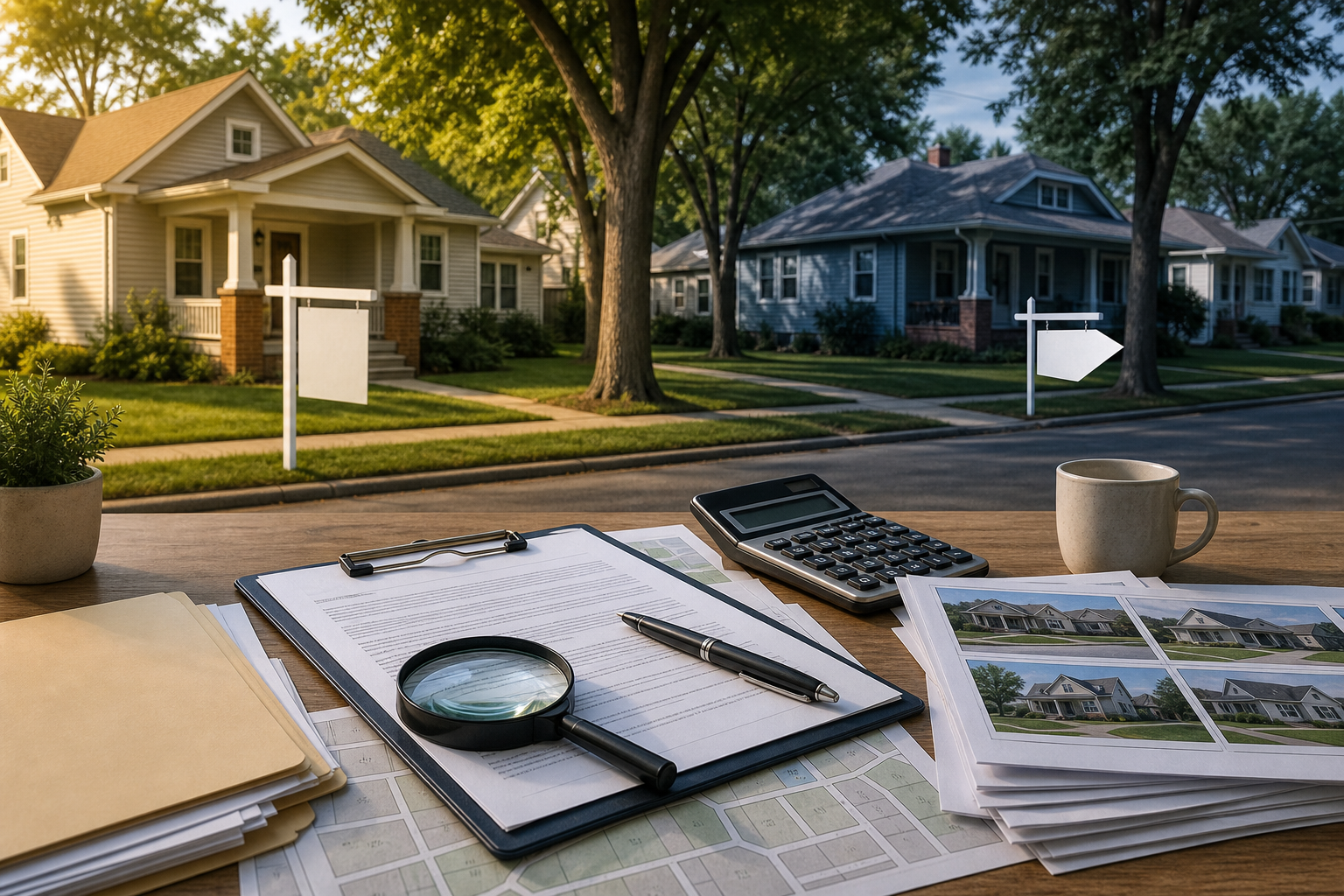
Home Prices Now: Where Values Are Rising and Where They’re Cooling
Thesis: Home prices are not moving as one national market. Values are rising where supply is tight, homes are move-in ready, and buyer demand still clears today’s mortgage payments. Values are cooling where inventory has built up, new construction competes hard, affordability is stretched, or distressed activity is rising. Before you price, buy, refinance, or tap equity, compare the national trend against your block-level comps.
The National Number Is Only the Starting Point
National home-price headlines are useful, but they are blunt instruments.
The [FHFA House Price Index](https://www.fhfa.gov/data/hpi) tracks changes in single-family home values across all 50 states and more than 400 U.S. cities, with data extending back to the mid-1970s. That makes it one of the strongest official measures for long-term price movement.
The [National Association of Realtors Existing-Home Sales](https://www.nar.realtor/research-and-statistics/housing-statistics/existing-home-sales) data tracks sales and prices for existing homes nationally and by region, including single-family homes, condos, and co-ops.
Together, these sources answer the big question: Are prices broadly rising, flat, or falling?
But they do not answer the homeowner question that matters most:
What is my house worth compared with the last five serious comps within a tight radius?
That is the difference between market commentary and a usable pricing decision.
Where Values Are Still Rising
Home values are more likely to keep rising in neighborhoods with three conditions.
1. Low Available Inventory
If buyers have few comparable homes to choose from, sellers have more leverage. This is especially true in established neighborhoods where there is little vacant land and limited new construction.
Look for:
- Few active listings similar to your home - Fast pending sales - Multiple recent closings near or above list price - Low days on market for updated homes
This is the classic tight-supply setup. Even when national demand softens, the best-located homes in undersupplied areas can still command strong prices.
2. Strong Buyer Fit
Homes that match current buyer preferences tend to outperform.
That often means:
- Updated kitchens and baths - Functional floor plans - Good condition with limited repair risk - Reasonable commute access - Strong school, safety, or amenity pull
In a higher-payment environment, buyers are less willing to pay top dollar for homes that need immediate work. Turnkey properties often separate from the pack.
3. Limited New-Home Competition
New construction can cap resale pricing when builders offer incentives, rate buydowns, or quick-delivery homes nearby.
The [Census New Residential Sales](https://www.census.gov/construction/nrs/current/index.html) report showed new single-family home sales at a seasonally adjusted annual rate of 580,000 in May 2026. The [Census New Residential Construction](https://www.census.gov/construction/nrc/current/index.html) report showed privately owned housing units authorized by building permits at a seasonally adjusted annual rate of 1,413,000 in May 2026.
For homeowners, the key is not the national construction number. It is whether builders are active near you. If they are not, resale supply may stay tighter.
Where Values Are Cooling
Cooling does not always mean prices are crashing. Often it means homes sit longer, sellers cut prices, and buyers negotiate harder.
1. Inventory Is Building
A cooling market usually starts with more choice.
Watch for:
- More active listings than recent months - Repeated price reductions - Homes relisting after failed contracts - Longer days on market - Sellers offering credits or repairs
If buyers can compare 10 similar homes instead of three, pricing power shifts.
2. Mortgage Payments Are Pinching Demand
Mortgage rates directly affect what buyers can afford. The [Freddie Mac Primary Mortgage Market Survey archive](https://www.freddiemac.com/pmms/archive) provides historical mortgage-rate data, which is useful for understanding how payment pressure changes over time.
A homeowner should not just ask, “What are homes selling for?”
Ask:
What monthly payment does today’s buyer face at this price?
If prices rose quickly while rates stayed elevated, the buyer pool may shrink. That can show up as fewer showings, slower offers, and more aggressive negotiation.
3. New Construction Is Competing With Resales
In markets with heavy building, existing homes compete with brand-new product.
Builders may offer:
- Closing-cost assistance - Mortgage-rate incentives - Appliance or upgrade packages - Faster move-in options - Warranty coverage
If your resale home is priced near a new build but needs updates, buyers may demand a discount.
4. Distress Is Increasing Locally
Foreclosure activity is not the whole market, but it can pressure specific neighborhoods when it clusters. [ATTOM](https://www.attomdata.com/news/category/foreclosures/) tracks foreclosure market trends and distressed-property data across the country.
For homeowners, the question is local:
- Are there bank-owned properties nearby? - Are foreclosure filings increasing in your ZIP code? - Are distressed sales becoming comps?
Before your next property decision, use PropertyDeepDive to check public records, recent sales, ownership history, permits, liens, and neighborhood-level signals so you are comparing the national market to what is actually happening on your block.
What To Do Next
Use the national market signal to decide what to verify, then check the address itself. Run a PropertyDeepDive report before pricing, buying, refinancing, or relying on a valuation estimate so the public records, ownership history, taxes, permits, liens, and comparable-sale context are part of the decision.