The Builder Pipeline: How New Supply Is Reshaping Housing
New housing does not arrive when a ribbon is cut. It arrives in stages: zoning capacity, land control, permits, starts, construction, listings, and sales. Homeowners who watch only completed homes see supply last. The more useful question is: what is already authorized, and can it realistically be built in your local market?
National data says the pipeline is active but uneven. The Census Bureau reported a seasonally adjusted annual rate of 1.443 million privately owned housing units authorized by building permits in July 2026. New single-family home sales ran at a 628,000 annualized rate in June. Those are national signals—not a forecast for any one neighborhood—but they show why local pipeline analysis matters.
The Supply Pipeline Is Not One Number
Treat new supply as a sequence, not a headline.
1. Zoning and buildable rights determine what may be built. 2. Permits show what has been approved. 3. Starts show builders committing labor and capital. 4. Homes under construction show future inventory that is closer to market. 5. Completions and active listings show supply buyers can actually choose today.
Each step answers a different homeowner question.
A permit count can warn of future competition for sellers, but permits can expire, stall, or be redesigned. Starts are a stronger commitment signal. Homes under construction matter when estimating near-term disruption, new listings, or school and traffic pressure. Completed homes affect the market immediately.
The key is to compare like with like: single-family homes against single-family homes, apartments against apartments, and your county or metro against its own recent history.
Why New Construction Changes Existing Homes Too
New construction is not a separate market. It competes with resale homes for buyers, contractors, land, and financing.
When builders add homes in a local price band, resale sellers may face better-equipped competition: new appliances, warranties, rate buydowns, closing-cost credits, and move-in-ready condition. That does not automatically reduce existing-home values. Location, lot size, mature landscaping, school assignment, and established neighborhood character can still matter greatly.
But it changes the comparison set.
A homeowner planning to sell should ask: “What can a buyer get new, nearby, for a similar monthly payment?” Mortgage rates matter here, which is why Freddie Mac’s Primary Mortgage Market Survey is useful context. Builders can sometimes use incentives to narrow the payment gap even when their sticker prices are higher.
A homeowner planning to buy should ask the reverse: “Is the premium for new construction buying real value, or simply an incentive package that masks a higher base price?”
Read Local Permits Before You Read National Headlines
National construction data provides direction. Local public records provide the decision-grade detail.
Use this simple screen:
1. Measure the pipeline
Check monthly or quarterly permit activity in your city, county, and metro. Look for the number of units, property type, project address, developer, and approval date.
Then separate:
- Single-family subdivisions - Townhomes and small-lot homes - Multifamily buildings - Large mixed-use projects - Rebuilds, additions, and replacement homes
A surge in apartment permits may matter for rents and neighborhood activity without creating much direct competition for a detached-home seller. A new subdivision with hundreds of similarly priced homes is a more direct signal.
2. Check whether permits are becoming starts
Approved plans are not finished homes. Visit planning agendas, building-department records, subdivision plats, and infrastructure approvals. Evidence of grading, utility work, road construction, and foundation permits usually indicates that the project is moving beyond paper.
3. Map the likely buyer overlap
Compare the project’s probable home type, size, price range, school area, commute pattern, and amenities with your own property. The relevant supply is not every new unit in the metro. It is the new inventory a realistic buyer would cross-shop.
4. Watch the resale market beside it
Existing-home sales data from the National Association of Realtors, local listing data, and market research from Zillow or Redfin can help frame current demand and supply. FHFA’s House Price Index can provide a broader view of price changes across states and cities.
Use these as context, not as a substitute for property-level review.
The Zoning Check Most Homeowners Skip
The pipeline starts before permits. Zoning determines what could be built even if nothing is proposed today.
Before assuming nearby land will remain open, low-density, or industrial, review the parcel’s zoning district, future-land-use map, overlays, adopted plans, pending rezoning cases, and subdivision applications. Also check utility access, road capacity, floodplain constraints, and entitlement conditions.
The practical insight: vacant land is not automatically buildable, and a permitted project is not automatically inevitable. Rights, infrastructure, financing, and market demand all shape what actually reaches the market.
Make a Better Property Decision
Do not “bet” on new inventory based on a national permit headline. Build a local supply file instead:
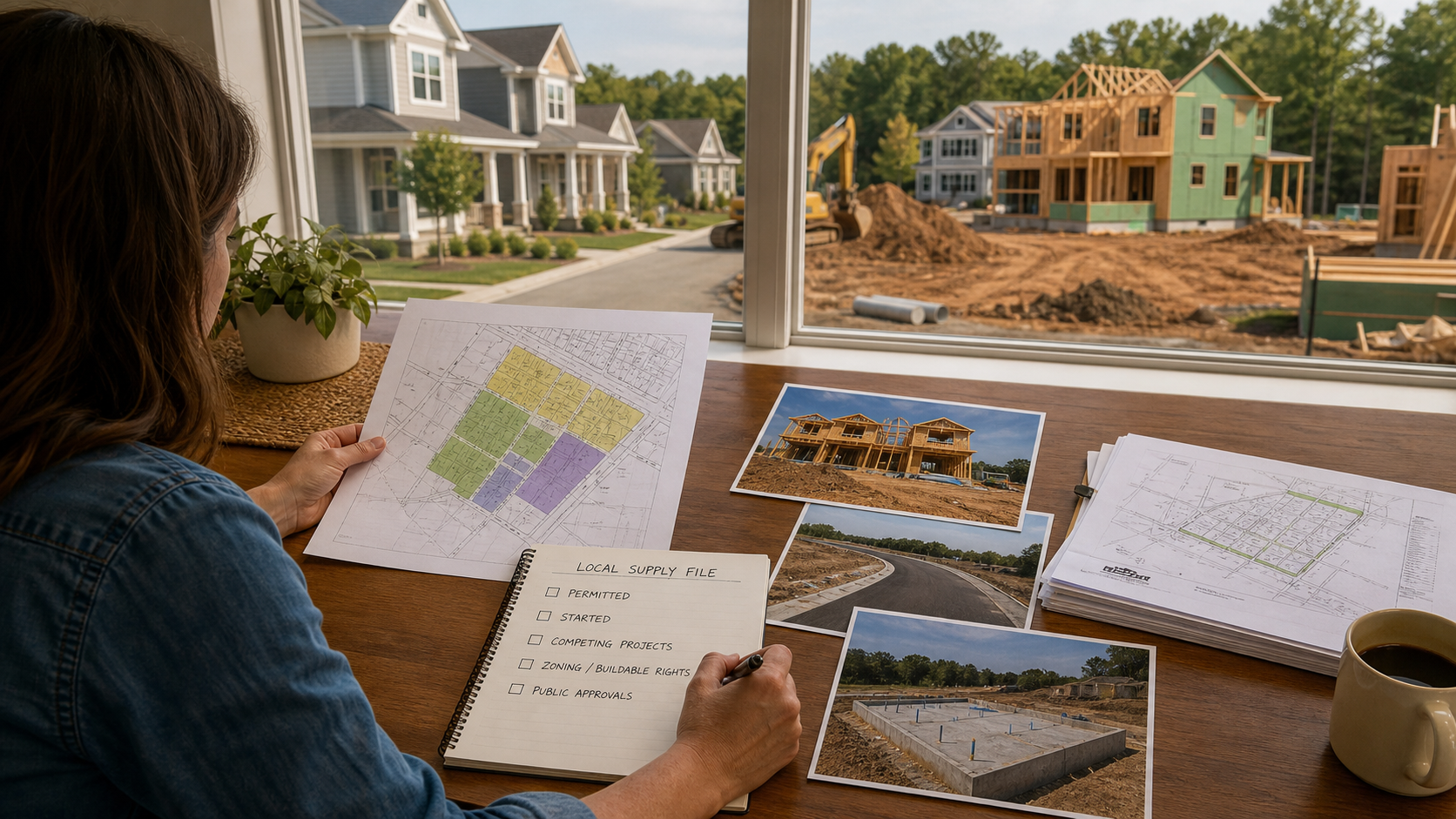
- What is permitted within your likely buyer or lifestyle radius? - What has actually started? - Which projects compete directly with your home type? - What zoning allows on nearby undeveloped parcels? - What public approvals could change the answer?
New supply can create competition, choice, and neighborhood change. It can also reveal that a feared wave of construction is years away—or legally constrained before it begins.
Before making a PropertyDeepDive decision, check the public records: permits, planning agendas, zoning maps, plats, and buildable rights for the specific property and surrounding parcels.